Detailed Media Interview with
TrueSelfIQ founder Roy Sheppard
As a journalist, you are invited to copy and paste this long text to use extracts in articles and blog posts.
If you have any additional questions you’d like to ask Roy simply email: Hello [@} TrueSelfIQ.app - he’ll get back to you as quickly as possible.
At the end of this interview you will find more than 25 possible headlines you can use.
- What was the personal or professional moment that made you decide to build TrueSelfIQ? Applying app technology to something I originally published in a book in 2011 intrigued me - especially as it's more relevant now than it was back then.
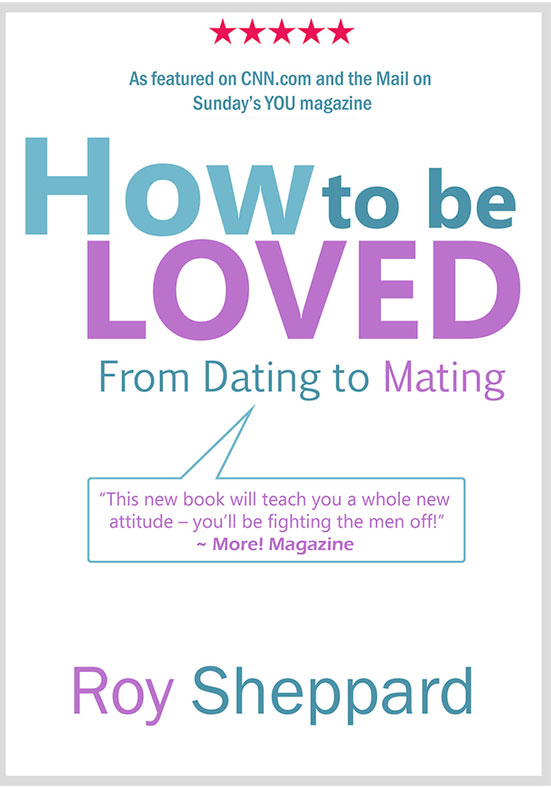
My role as a former BBC reporter and later as a facilitator forces you to look at situations differently. There are thousands of books about dating. In my view, so many offer questionable or even terrible advice - such as offering tips on how to use manipulation and trickery to ‘snag’ a partner. I wanted to write something very different. It started as a ‘dating’ book, but I quickly realised it wasn’t about ‘dating’ - it was a personal development book for single people who’d rather not be single. That was in 2011. “How to be LOVED: from dating to mating” (formerly entitled “How to be the One”) asked this question; Why would anyone choose to stop their search for a partner once they’ve met you? The chapter “Project YOU” first introduced the concept behind TrueSelfIQ. It grew from that. All these years later, new technology makes it possible to do this digitally. That challenge intrigued me. And it was a complex tech challenge for the team of developers who worked on it.
- You're a former BBC reporter. How does that background inform how you've approached this app?
Being a reporter teaches you to look behind the stories you cover - questioning context, motive and intentions can be so revealing. My most valuable lesson I learned all those years ago was being far more attuned to spotting how individuals express their opinions as if they are facts. So many people (especially politicians) do this all the time in the media. It amazes me to see how much they get away with it. But it's even more common among individuals who load their own minds with opinions which they automatically believe are facts! This app cuts through that tendency.
In addition to my experience as a reporter, about 30 years ago I enrolled on a course to train as a hypnotherapist. I never intended to go into practice. But this changed the trajectory of my life. It taught me how to gain a much deeper understanding of how people think - how they communicate with themselves and how they process their thoughts and beliefs internally. Which is inevitably linked to their helpful and unhelpful behaviours. It transformed my interviewing skills on-stage and on-camera - and the effectiveness of coaching sessions I had with countless senior executives over the decades since.
In relation to the app, there’s common agreement by experts globally that young people in particular are struggling in so many ways - but especially with social anxiety and meeting people in real life. In my view, the algorithms used across social media platforms are causing havoc with the mental health of young people - especially with self-esteem. They tend to believe without questioning, what they see and hear online. The online dating world has become a brutal place especially for men. My hope is that the app, will help male and female users to get what I call “relationship real”.
- How long has this been in development, and what did early versions look like?
As I say, it was originally conceived in 2010/11 - most of the questions have remained almost exactly as they were back then. With only a few tweaks. It probably confirms that these issues are universal and timeless. The complexity of the app has been the most difficult part for me. And because it took so long, it cost me a lot more than I planned to spend.
- Is this a business, or a passion project? What are your commercial ambitions for it?
I am now retired. I’m comfortably well off following a relatively successful career. So I don’t work for money any more. This is more about ‘completing the circle’- updating “How to be LOVED” was the first part. The dating world has changed beyond recognition since it came out in 2011 - that was two years before Tinder was launched. I’m the type of person who needs mental stimulation - just sitting on a porch admiring the view has never been my style - so this and another project of mine truly engage me mentally.
I am hoping that all users find the app incredibly helpful. For those who want to follow it up with some personal development, which might include buying my book or audiobook. The app is free at the moment - but if it resonates and takes off globally I might charge a small fee to pay for developers to translate it into other languages) and to fund my true passion project my “Healthy Masculinity Channel” on YouTube - www.YouTube.com/@ModernManAcademy. It has already generated more than 300,000 video views. In a world where ‘toxic masculinity’ has become so prevalent and is promoted so widely (as brilliantly captured in Louis Theroux’s documentary “Inside the Manosphere”) - a world with more good young men has to be a good thing, right?
4b. You sound quite idealistic. Are you?
Haha. Many years ago, I did a brilliant assessment called Lumina Spark - among many other qualities - I was ‘off-the-scale idealistic’!
- Who is your target user — and how broadly do you think this applies beyond the dating world?
This is for people willing to take responsibility for their role in relationships. And it’s for anyone who is open to becoming more self-aware and is prepared to put in at least some effort when it comes to relationships. There’s a myth that ‘love’ just happens - you swoon and get swept away with it all. The reality is VERY different of course. Good, long-term relationships are hard. They require energy and commitment - from both parties. The pay-offs are potentially enormous when you are in a relationship where both parties are part of the same team.
To your point about ‘beyond the dating world’. Absolutely.
COVID, in particular, has had a devastating longer-term global impact on young people - who missed out on the critically important socialisation aspects of moving from being a child/teen into being adults. The twenty-somethings I know all agree that social skills among their peer groups and friendship circles are often very weak. This crucial life skill has been lost in just one generation. Social skills begin with self-knowledge - developing a deeper understanding of how you come across - and that applies massively in the workplace. In fact, as the world of work continues to embrace AI - it's my belief that human skills such as trust, respect, cooperation and collaboration will become more important in the future - not less. As Daniel Goleman stated in his ground-breaking book “Emotional Intelligence” - you can learn to develop it. TrueSelfIQ could be the catalyst a lot of people need right now - for dating as well as the workplace.
- What's the psychological framework behind the gap between self-perception and how others see us?
I come at this as a journalist, not as a psychologist, sociologist or researcher - but yes, this is a well-established idea in psychology — we experience ourselves from the inside, while others experience us from the outside: what we say - but more importantly, our behaviours - especially how we treat (or mistreat) others. It focuses on the difference between a person’s intentions versus unhelpful behaviours.
There are a few overlapping frameworks that explain it.
One is the Johari Window, which shows that there are always aspects of ourselves that are visible to others but are hidden from us — what’s often called the ‘blind spot’. Another is the ‘self-serving bias’, where we naturally interpret our own behaviour in a more favourable or forgiving way than others might. And there’s also the illusion of transparency — the idea that we assume our intentions and feelings are obvious to others, when in reality they’re not.
What TrueSelfIQ does is make that gap more visible in a structured way — not as criticism, but as insight. When the gaps are revealed to us, they can have a profound impact on how we choose to behave in the future.
- Is there existing research that supports the idea that self-perception gaps affect relationship outcomes?
Yes — there’s a strong body of research suggesting that self-awareness, and specifically accurate self-awareness, is closely linked to relationship quality.
I’m a huge fan of John Gottman and his extensive relationship research, which consistently highlight that how partners experience each other — things like tone, responsiveness, and emotional awareness — plays a critical role in long-term successful relationships.
What’s interesting is that small differences in perception can have significant negative effects. For example, if one person believes they’re being confident, but the other experiences them as intimidating, that can push others away. So it’s not just about who you are — it’s about how that translates in the other person’s experience of you.
That’s really the space TrueSelfIQ sits in.
It helps people understand not just their internal identity, but their external impact on a partner— which is ultimately what shapes how compatible they are as a couple.
- How is this different from existing personality tests like Myers-Briggs, the Big Five or attachment style assessments?
I’m actually a fan of personality frameworks — I’m proudly an INFP, according to Myers-Briggs — and I think tools like that can be very useful.
But they all tend to have one thing in common: they rely on how you see yourself. TrueSelfIQ adds a completely different layer. It shows you how you’re experienced by friends who know you well: its your internal identity versus your external impact.
So instead of just asking, ‘Who do I think I am?’ it also answers, ‘How do I actually come across?’
For me, that’s where things get really interesting. For example, you might identify as empathetic, thoughtful, and introverted — which fits my INFP profile — but others might experience me as distant in certain situations, or hard to read. Neither perspective is wrong — but the difference between them can shape how people feel around you, especially in dating and relationships.
Personality tests describe your internal world. TrueSelfIQ reveals your external impact.
And when you put those two together, you get a much clearer picture of compatibility — not just who you are, but how that actually translates in real-life interactions; for dating, friendship or in a work-environment.
- Why do you think most people have an inaccurate view of how they come across?
As more and more people live online - millions have become accustomed (and never even question) whatever the various algorithms tell them. In dating terms it’s well known that the algorithms convince women they are more desirable than they might be in reality. While the algorithms do the opposite to men. Men experience so much rejection online, they learn to feel less desirable than they would be in real life. I go into a lot more detail about these dynamics in the free download of the updated 2026 introeuction to “How to be LOVED”. Click the preview icon here: https://payhip.com/b/61zL7 - no sign-up required.
- You talk about "compatibility" as something deeper than chemistry — how do you define compatibility, and can an app really measure it?
Let’s be honest here - in a western culture - ‘chemistry’ usually refers to sexual attraction. How much you want to rip off each others clothes! So in this context - ‘Chemistry’ is about how much you want to go to bed with someone. ‘Compatibility’ is more about how much you want to wake up with them! 🙂
And if you want to do both over a long period - you’ve possibly hit the jackpot!
Seriously though, Chemistry is often instant — it’s how that person makes you feel in the moment. Compatibility is much deeper — it’s how you function together over time. The problem is - when chemistry fades, you might not be together long enough to find out how compatible you are. I’d define compatibility as the alignment between a couple’s values, communication styles, emotional intelligence and how two people create trust, calmness and harmony together.
I don’t think any app can measure compatibility in a definitive sense — but it can highlight something that strongly influences it: self-awareness. Because TrueSelfIQ shows the gap between how you think you come across and how others actually experience you, when two people understand that about themselves — and each other — they’re in a much stronger position to assess real long-term compatibility. So it’s not claiming to predict relationships. We’re simply helping people understand the factors that shape them.
- Is self-awareness something that can genuinely be improved, or are people's personalities largely fixed?
Of course it can be improved. If you want to improve enough. But the first part is finding the courage to find out - and realise feedback from trusted friends comes from a good place - they are trying to help you.
- Walk me through exactly what happens from the moment someone downloads the app.
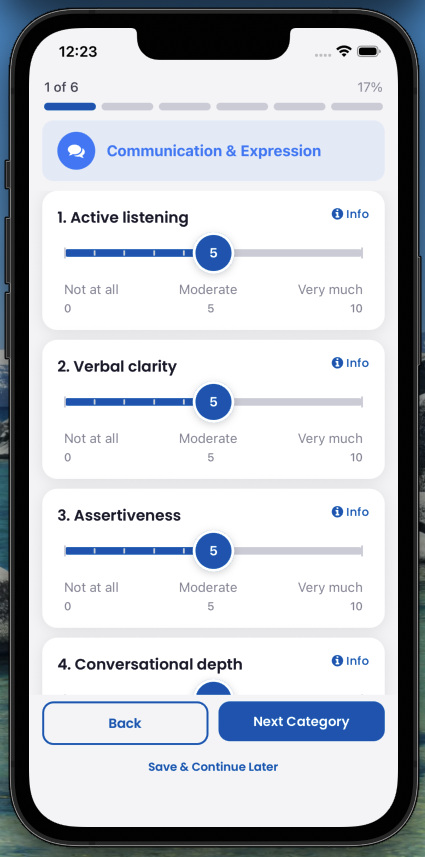
You follow the simple prompts to complete your self-assessment -which takes 3-5 mins. There are 6 sections:
1. Communication Style
How you express yourself — and how you come across in conversation.
2. Emotional Presence
How you show up emotionally — and how others feel around you.
3. Confidence & Energy
Your level of confidence — and how that energy is experienced.
4. Behaviour & Habits
What you consistently do — not what you intend.
5. Values & Attitudes
What matters to you — and how that shows up in your behaviour.
6. Relationship Readiness
How prepared you are for a healthy, balanced relationship.
For each of the 60 traits within the self-assessment, you mark yourself on a scale of 0-10 (zero is the lowest, ten is the highest).
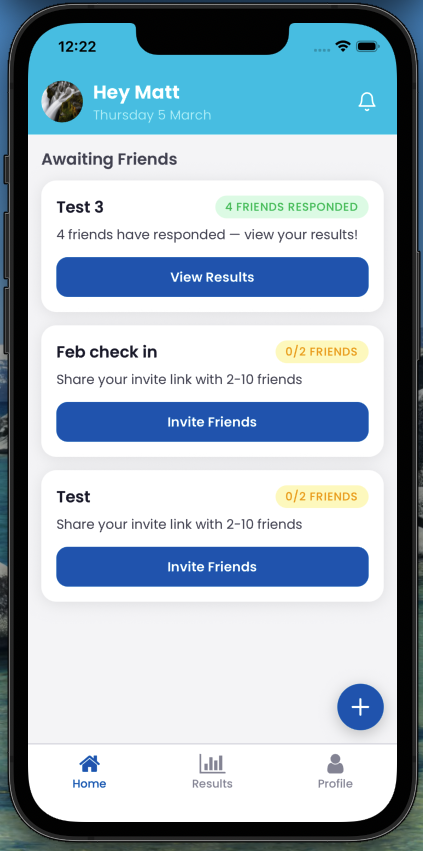
You can then invite up to ten people who know you well to do the same assessment about YOU. You can choose from WhatsApp, sms or email. The app takes you directly to those platforms - the app doesn’t capture any of your contacts.
You then send a private link to those friends, family or trusted contacts.
They respond anonymously.
At the end of the assessment, they are invited to add KIND and constructive free-text comments about you.
You get notified each time someone submits their assessment of you. To protect their anonymity, the system is ‘locked’ (you can’t see any of their inputs) until 2 or more friends submit.
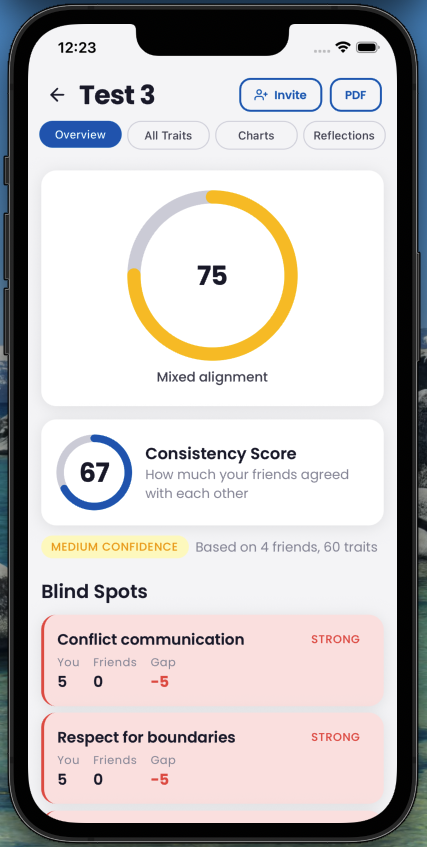
At any time, you can download a private pdf report that gives your TrueSelf Score and the TrueSelfIQ gap - the gap between what you think about yourself - and what others think. From this report you can clearly see:
-
- Blind spots — Traits or behaviours you didn't realise you were projecting
- Hidden strengths — Qualities others see in you more clearly than you see in yourself
- Alignment areas — Where your self-view matches how others experience you
- Patterns — Clues to why certain relationship situations keep repeating.
- 13. How do you ensure the questions in the assessment are robust and validated?
Extensive testing before we launched was a priority. This testing went through quite a number of iterations over a few months - but it was important to iron out bugs and glitches. Obviously, if we (or users) identify areas for future improvement, we’ll add them into future updates.
- What stops someone from gaming the self-assessment — answering how they wish they were rather than how they actually are?
Cheating others or cheating yourself is up to you - that type of thinking or behaviour is probably a major contribution to the way your life has turned out so far! We’ve done our best to minimise abuse of the system. But dishonest people do what dishonest people do! And the online dating world attracts dishonest predators (male and female).
- How many responses do you need from friends to get a meaningful result?
The system can handle up to 10 friends - this will give the most accurate results. Two is the minimum (less than two and it’s obviously not anonymous!) Personally, I’d aim for at least 4 or 5 as a bare minimum.
- What happens if someone only gets two or three friends to respond — is that still useful?
Anything is better than nothing. But patterns definitely become clearer with more responses.
- How do you ensure the friends giving feedback are being honest rather than just being kind?
Anonymity increases the likelihood of honest feedback. You have no control over what friends say (lack of control is a problem for a lot of people) but I would hope they are friends because a) they like you b) they know you and c) they would want to help you.
- You say feedback is anonymous — but if someone only invites three friends and gets a very specific piece of feedback, couldn't they work out who said it?
That is possible. But the system is capable of flagging certain types of data manipulation. And as part of the terms and conditions for using the app, the user agrees not to abuse or manipulate anything that could undermine the safe space the app is trying to create in order to encourage friends to be honest with you.
- How is user data stored, and who has access to it?
User data is stored securely using modern cloud infrastructure with strict access controls.
We separate personal account data from assessment responses, and friend feedback is anonymised before it’s aggregated — so individual responses can’t be traced back to specific people. Access to data is tightly restricted. Users can only see their own results, and invited participants don’t need accounts or visibility into the system beyond their input. They don’t ever see the end-users results. Although the user can choose to show it to them if they want to.
At a system level, administrative access is limited and protected. We only store what’s necessary for the app to function. In short, users remain in control of their data, and privacy is built into the design from the start.
- Could the data ever be sold to third parties — insurers, employers, advertisers?
Never. Not going to happen. Ever.
- What happens to someone's data if the company closes or is acquired?
If we cancelled the app for whatever reason - I’d make sure all data was simply deleted.
- Are you GDPR compliant, and has that been independently verified?
Privacy by design has been the mantra since its inception with my professional developers (Nova Labs in Birkenhead, Liverpool, UK), particularly because TrueSelfIQ involves personal perceptions and sensitive insights. The app has been designed in line with GDPR principles — including data minimisation, user control, and transparency. Users choose who to invite, feedback is anonymised, and we only collect the information necessary for the app to function. We’ve also built in features such as account deletion and clear consent mechanisms, so users remain in control of their data at all times.
In terms of independent verification, we’ve followed established best practices in how the system is designed and implemented, and we’re continuing to review and strengthen our compliance as the platform grows. This is an ongoing commitment for this new app, rather than a one-time checkbox — and it’s something we take very seriously.
- "Chemistry" is subjective and personal — aren't you oversimplifying something very complex by dismissing it?
Correct - it is subjective and personal. But it’s not being dismissed though. Since dating apps were created - its almost all been about chemistry - and look at the mess that has created! This is about something very different. It’s about improving self-awareness and revealing factors that relate to connection and compatibility.
The self-assessment takes 3-5 minutes - any shorter it probably wouldn’t deliver enough meaningful insights and any longer, it runs the risk of putting off too many people (especially busy friends). Where you draw that line was the subject of many conversations during the development stage.
- Isn't it possible that chemistry IS compatibility for some people — that the spark is actually a signal of deep alignment?
I agree - to a point. The initial chemistry might get you the date - but for those who don’t get consumed by the intensity of that chemistry, over time it morphs into compatibility as well. A double win for those involved!
- You say chemistry fades — but plenty of long-term couples say they still have it decades later. Doesn't that undermine your argument?
Every older person KNOWS chemistry and passion fades. In happy relationships it's often replaced by something better. My guess is - those who have chemistry and passion after a long time, is always supported and enhanced by compatibility and mutual commitment.
- Are you essentially telling people to be more rational and less emotional about love — and is that realistic?
The way this question is phrased makes it sound binary - which it isn’t. This isn’t about choosing between being rational or emotional. Both are essential in relationships. Emotions are how we respond to initial attraction and connection — that spark we often call chemistry. But without some level of understanding and self-awareness, those emotions can also be confusing and misleading.
What TrueSelfIQ does is add a layer of clarity to that emotional experience. It helps people understand how they’re coming across, and how that might be influencing the way others respond to them. That doesn’t remove emotion — it helps make sense of it.
In reality, the strongest relationships tend to combine both: emotional connection and a clearer understanding of each other. So this isn’t about making love more rational. Although in my book I explain why real love is a decision, not just the rose-tinted emotion that Hollywood has been ramming down everyone’s throats since cinema began!
The app is about making emotional experiences easier to understand — and therefore easier to build on.
- Could focusing on "compatibility scores" make dating feel transactional or clinical?
It doesn’t provide ‘compatibility scores’. That’s not the purpose of the app. For millions of online dating users, the superficiality has been incredibly transactional and clinical since the beginning, So in many ways, this is moving in the opposite direction.
TrueSelfIQ isn’t about reducing people to a score or turning relationships into a formula. The ‘score’ is simply a way of making something complex easier to understand — it’s a starting point, not a conclusion. What we’re really doing is bringing more humanity back into the process — helping people understand how they’re experienced, how they communicate, and how they affect others in real life. That’s not clinical — it’s actually much closer to how relationships really work. If anything, it encourages people to move beyond surface-level judgements and engage more thoughtfully, with greater self-awareness.
So rather than making dating more transactional, the aim is to make it more real.
- Isn't this just another tech solution to a fundamentally human problem that technology can't fix?
There’s an important distinction to be made here - the technology isn’t trying to fix someone. It reveals patterns. It’s a tool that enables safer feedback by people who know each other well.
- If someone gets harsh feedback through your app — "people find you clingy, domineering, unapproachable" — what responsibility do you take for the psychological impact of that?
Bluntly - I don’t. And won’t. That might sound harsh. But in the real world - you can’t control how other people think or behave. If someone asks for honest feedback and you give it truthfully (and hopefully with good intentions) - it would be unreasonable of you to blame that person. Indeed, such behaviour could actually prove their feedback was honest and largely correct. All this app can do is shine a spotlight on the issues raised by friends.
In terms of the app, it clearly states in the terms of use that no one involved in the creation of the app accepts responsibility for how it is used.
- Could this app actually damage people's confidence and mental health rather than help them?
In my view, it’s more likely to improve confidence and mental health, because when people understand how they’re experienced, things start to make more sense. Any feedback about ourselves from people who know us well has the potential to affect confidence — but what tends to be more damaging, in my view, is uncertainty. Not knowing why things aren’t working often leads people to fill in the blanks in quite negative ways.
TrueSelfIQ is designed to replace that uncertainty with more clarity. Uncertainty is more damaging than feedback.
They can then make small, practical adjustments, see some better outcomes, and feel more in control. It shifts the focus from ‘What’s wrong with me?’ to ‘What can I learn about how I come across?’
And that’s a much more empowering place to be.
- Have you consulted psychologists or relationship therapists in designing the assessment? If not, why not?
No psychologists. Deliberately. But quite a few relationship coaches like me.
This is about real-world perceptions between people who know each other - not clinical diagnoses.
Psychologists haven't always been guardians of human wellbeing in the commercial space. In fact, many have been hired to exploit human psychology. In the 1950s Vance Packard published “The Hidden Persuaders” which lifted the lid on how this happened in the advertising and marketing industries. It documented the sophisticated manipulation back then. These highly paid psychologists and marketers discovered nearly a hundred years ago that happy people don’t feel the need to spend a lot of money. But unhappy, insecure people DO! So they set about creating a society of unhappy people selling the fake promise “If you buy our product you’ll be happy!” There’s even a name for it “retail therapy.”
Today mass manipulation is at a totally different level. It’s incredibly manipulative and addictive - as a recent landmark lawsuit against Meta and YouTube demonstrated that these platforms are designed to be addictive. According to Forbes magazine, the platforms acted with “malice, oppression or fraud,” Meta was assigned 70% of the responsibility; YouTube bore the remaining 30%.
In my view, dating apps also engineer addiction. To keep people scrolling, swiping and spending. In my view, their business model depends on people not finding lasting relationships too quickly. The algorithms are optimised for online interaction, not a long-term happy relationship. Those who find someone have become the exception rather than the rule! Chemistry — that addictive dopamine hit of a new match — is exactly the kind of feeling those platforms are designed to maximise and prolong.
For so many decades they have been hired at great expense by commercial interests to unearth and then commercialise deeper and deeper human insecurities - to create wants and needs that previously may not have even existed. They’ve helped manufacture insecurity in order to persuade people to use their credit cards!
TrueSelfIQ does the EXACT opposite. It’s an attempt to introduce honesty into a space built on carefully managed illusions. Without an algorithm. Just real feedback from real people who actually know you.
- What qualifies you — a journalist, not a psychologist — to build a tool that delivers personal psychological feedback?
It’s a fair question — and an important distinction. I was waiting for the question!
As I’ve said, TrueSelfIQ isn’t a clinical or diagnostic tool, and it’s not presenting itself as psychological therapy or professional advice. What it does is much simpler — but still very powerful.
Its structured observation of human behaviour: people form impressions of us all the time. Sometimes it doesn’t really matter that much - but when you’re in a relationship with someone it is important.
As a journalist, my background has been built around listening, observing human behaviour, recognising story inconsistencies and understanding how people experience each other — often in very different ways. That perspective is actually very relevant here, because the app isn’t trying to interpret people at a clinical level.
It’s simply comparing two viewpoints:
- how you see yourself and
- how people who know you experience you.
The insight comes from that comparison — not from the app “diagnosing” anything.
We’ve also grounded the concept in well-established coaching and psychological ideas around perception, self-awareness, and interpersonal dynamics — but we’ve made it accessible and practical.
I’d position it as a structured way of helping people see something that’s usually invisible — how they come across — and then decide for themselves what to do with that insight.
33. Dating apps have been widely criticised for harming mental health and self-esteem. How are you different?
Bluntly - this is not a dating app! I think that criticism of dating apps exists for a reason. Many dating apps are built around comparison and rapid judgement — you’re constantly being evaluated on photos, profiles, and split-second decisions. Over time, that can affect how people feel about themselves, especially if they’re not getting the responses they would prefer.
TrueSelfIQ is designed very differently.
It’s not about being chosen by strangers. It’s about understanding how you’re experienced by people who already know you.
So instead of external validation — likes, matches, swipes — it’s focused on self-awareness and clarity. The feedback comes from trusted people, it’s aggregated and anonymous, and it’s presented as insight, not approval or rejection.
In many cases, that actually reduces anxiety, because it replaces guesswork with understanding. People often feel worse when they don’t know why something isn’t working. When they can see how they’re coming across more clearly, they can make sense of their experiences — and that tends to be more empowering than discouraging.
So the difference is:
dating apps ask, ‘Do people like me?’
TrueSelfIQ asks, ‘How am I perceived — and what can I learn from that?’
And that shift moves the focus from judgement to understanding. We’re not putting people on display — we’re helping them understand themselves. And that’s a very different experience psychologically.
34. Couldn't this app be used to manipulate people — learning exactly what others think of you in order to project a false version of yourself?
Yes - I guess so. A dishonest person will find allsorts of ways to use anything to their advantage and manipulate the unsuspecting - which is why I would advise that no one takes anyone’s claims as ‘fact’. Be careful in the same way, you would in all other scenarios when getting to know someone new.
- What if the feedback someone receives is simply wrong — biased friends, a bad day, people who don't know them well enough?
This is where the number of friends comes into play - the larger the number of people who do this for you, the less likely it will be that any one person’s negativity will be absorbed into the data.
- You're asking people to invite friends to assess them. What if that dynamic damages those friendships?
A glib answer might be - they weren’t that close as friends to start with - this just highlighted it. It’s perhaps more likely that someone is invited because the user really wants the feedback - but the friend’s priorities are different - or they claim to be too ‘busy’. They might not care enough.
- Is there a risk that people become obsessed with their TrueSelfIQ Score in the same unhealthy way people fixate on social media metrics?
I don’t think so. It’s a snapshot. Users are invited to adopt new behaviours - then over time to re-visit the app - perhaps in 6 months. So its designed for periodic use, definitely not daily checking.
- Are you planning to monetise user data in any way — even anonymised or aggregated?
Never. Really. It’s not something I would even entertain - and a number of marketing ‘experts’ have tried to encourage me to do that. I simply won’t do it.
- How do you stop this being used vindictively — an ex-partner inviting people to submit negative feedback about someone?
Feedback is by invitation only - so that can’t happen. During development we discovered that the user could send an invitation to friends and then fill it in for themselves instead - we’ve fixed that to ensure the system flags inappropriate use. If a non-invited person tries to submit an assessment, they should receive an ‘invalid token’ error message stopping them from submitting.
- You've launched in Bristol — why? Is this actually ready for a wider audience, or is this a soft launch to test the concept?
It’s launched in Bristol purely because it’s near where I live! 🙂
- The relationship app market is crowded and brutal. What makes you think TrueSelfIQ can survive where others have failed?
It doesn’t need to ‘survive’ - it will simply exist - and people will use it or not. I hope they do - and benefit from it. I put my own money into developing it - purely to see if we could get it to work - early indications are that it does a great job. It solves a REAL problem experienced by millions of single men and women and it’s easy to use. So, we will just have to wait and see.
- What's your revenue model — is it subscription, freemium, one-time purchase?
It’s a free app at the moment. Ideally, I’d like some of the users to look at their results and accept they might need a bit of help - and choose to buy my eBook or audiobook. As mentioned earlier, one day I might charge a small fee for the app - purely to use it to develop and scale it - multiple languages especially.
- Could a larger player like Hinge, Bumble or Match Group simply copy this concept and crush you?
I’m flattered you think someone would want to steal/copy it.
More than 20 years ago, I read a fascinating book called “The Corporation” in which the author compared the well-documented traits of dangerous psychopaths with psychopathic behaviours of large corporations - I am definitely not suggesting Hinge, Bumble or Match Group are psychos though! That said, millions of people are rejecting a lot of the dating apps - some companies have been laying off staff in their thousands - so who knows how desperate these or others will become and resort to all sorts of shenanigans to please their shareholders in the short-term.
Instead of trying to copy the app - I would recommend anyone interested in offering this to their members to get in touch with an eye-watering offer to allow us to spend the rest of our days sipping Pina Coladas at sunset in exotic places 🙂 (Update: she’d prefer mojitas).
- Have you had any acquisition interest or investment conversations?
None at all. At the time of this interview, hardly anyone has ever even heard about TrueSelfIQ.
- What does success look like for TrueSelfIQ in 12 months? In five years?
Lots of positive user success stories would be fabulous. So it has developed a reputation for being robust and works seamlessly on a technical level. That’s essential in order to provide a trustworthy solution for those who use it to gain deeper self-awareness. And then use that knowledge to be a more appealing person so that it helps users enjoy the benefits of healthy relationships. At my age - I guess I see it as part of my legacy.
- Aren't there cultural differences in how people give and receive feedback that could make this work very differently across different communities?
Honestly, I think humans are basically the same all over the world. Most, if not all the traits within the app are universal. Some cultures are incredibly polite (perhaps a Japanese version one day would be particularly well received), others can be very blunt - so may be it won’t be so popular in the Netherlands (famous for direct feedback) or Russia (very blunt, verging on rude to westerners). Only time will tell!
- Could this app reinforce harmful stereotypes — what if feedback reflects unconscious bias rather than genuine personality insight?
It’s an important concern, and one we’ve thought about carefully.
Any form of human feedback — whether it’s from friends, colleagues, or even partners — can include bias. That’s true in everyday life as much as it is in any structured setting.
What TrueSelfIQ does is make those perceptions visible, rather than leaving them unexamined. The app doesn’t present feedback as objective truth. It presents patterns — aggregated, anonymised perspectives — and encourages users to interpret them thoughtfully, not react to them blindly.
In many cases, what emerges isn’t a stereotype, but a recurring experience. For example, if multiple people independently describe someone in a similar way, that can highlight how certain behaviours are being received — even if the intention behind them is different.
At the same time, we’re very clear that context matters. Users are encouraged to reflect on feedback, consider where it’s coming from, and decide what’s useful and what isn’t.
So rather than reinforcing stereotypes, the aim is to increase awareness — both of how you’re experienced, and of how perceptions themselves are formed.
Ultimately, it gives people more information, not less — and what they choose to do with that insight remains entirely in their control.
- Is there a risk this becomes a tool that pathologises normal human personality variation?
I do not agree with this premise. It conflates ‘normalness’ with attitudes and behaviours that may be undermining a person’s likability. Or their agreeableness. This app simply tries to help people get a better understanding of themselves by people who know them well - and as friends, you’d hope that had their best interests at heart. As far as I know, this has not been done before, so I’d be very interested to see if a user printed it out and shared it with a counsellor or therapist - how might it help, and what would the professional think about it as a tool - a help or a hindrance. I suspect it would be viewed as a help.
- You're essentially asking people to be judged by their social circle. Isn't that inherently exclusionary for people with smaller networks, social anxiety, or trust issues?
‘Judged’ is a harsh word. No one is being asked to be ‘judged’ - they are asking for honest feedback on areas of their life that affect how ready and open they might be for a genuine, long-term relationship.
If someone suffers from social anxiety and have smaller networks - I have an audiobook based on decades teaching professionals and university students how to initiate professional and respectful conversations with strangers - at conferences and on campus. It was designed for business - but the principles are exactly the same. It’s free. Add the code MODMA25 at the checkout here https://payhip.com/b/UbhDS and the price goes to zero.
- In a world already struggling with loneliness and low self-esteem, is more critical self-analysis really what people need?
So - is a better solution - leave them alone in their loneliness and low self-esteem? Hardly.
But some will possibly not want to engage with it - and may benefit from professional intervention instead - which is way outside the scope of this app. For those who recognise they have a ‘problem’ with dating, social anxiety or self-esteem and are prepared to do something about it for themselves - they could give it a go - it might help them.
- Have you used the app yourself? What did your own TrueSelfIQ Gap reveal — and are you willing to share it?
Fair question. Yes I did it myself - early in the testing stage. My own self-assessment score was 8.5. The aggregated scoring was only 5.7. My instant thought was OMG - that’s awful.
It required some further investigation - thankfully we discovered a fault in the scoring system! I had asked male and female friends. When I studied the detailed PDF report, I could see that some of the traits had a score of zero. These traits were more personal/intimate. In the instructions, friends are asked to leave a score at zero if they had no personal experience of me in relation to certain traits. The system was designed to filter out all zero entries so they weren’t included as part of the average/aggregated calculations - but that hadn’t happened. So all the zeros were included in the calculation - hence such a low score from friends! Thankfully, the developer fixed that very important feature.
- Has building this app changed how you see yourself in relationships?
Actually it has. I’ve been living this app for nearly a year. My own partner has been unbelievably patient, supportive and encouraging. She is an incredibly insightful person sometimes offering different perspectives— and has listened and advised far more than any normal person should! And she has forgiven my countless memory lapses when I’ve become too engrossed in working on the app with the developers. Hopefully it will all be worth it.
- What's the most uncomfortable piece of feedback the app has surfaced in testing?
Creating this app has consumed my life - it excites me. I think it's potentially very useful for a lot of people. But I received the same honest anonymous feedback from friends - I have talked too much about it to the exclusion of other aspects of MY and their lives!! I’m guilty as charged.
- If the app told you something about yourself you didn't want to hear — would you act on it?
I already have! 🙂
You are Invited to use any of the following Headlines
“See Yourself As Others Do”: The Rise of Relationship Intelligence in a Hyper-Digital World
From Chemistry to Compatibility: Why Relationship Intelligence May Be the Missing Piece in Modern Life
Think You Know Yourself? This App Says You Don’t — And It Could Change Your Love Life
The ‘Reality Check’ App: Find Out How You REALLY Come Across in Just Minutes
“I Thought I Was Confident — Turns Out I Was Intimidating”: The App Helping People Get ‘Relationship Real’
Why Your Relationships Aren’t Working: The Brutal Truth Your Friends Won’t Tell You
New ‘Relationship Intelligence’ App Reveals the Hidden Habits That Could Be Pushing People Away
Still Single? This App Claims to Show What You’re Doing Wrong — Without Sugar-Coating It
The App That Shows You How People REALLY See You — And Why It Matters More Than Looks
From ‘Charming’ to ‘Too Much’: The Surprising Ways You Might Be Coming Across
Get ‘Relationship Real’: The New App Promising to End Guesswork in Dating and Relationships
You Think You’re Easy to Date — This App Might Say Otherwise
“Get Relationship Real”: The App Helping People See Themselves As Others Do
Relationship Intelligence: The New Skill That Could Transform Your Love Life — and More
Why Seeing Yourself As Others Do Could Be the Key to Better Relationships
The Self-Awareness Gap: What You Don’t See About Yourself May Be Affecting Everything
From Attraction to Understanding: Why Relationship Intelligence Is Having a Moment
What If You Don’t Come Across the Way You Think? A New App Explores the Self-Awareness Gap
Beyond First Impressions: How ‘Relationship Intelligence’ Could Transform How We Connect
Understanding How You’re Experienced: The Case for Getting ‘Relationship Real’
Why Self-Awareness, Not Attraction, May Be the Key to Better Relationships
The Perception Gap: How Seeing Yourself As Others Do Could Improve Relationships — and Careers
‘Get Relationship Real’: A New Approach to Understanding Human Connection
From Identity to Impact: Why Relationship Intelligence Matters More Than Ever
The Limits of Chemistry: A New Tool Focuses on the Skills That Sustain Relationships
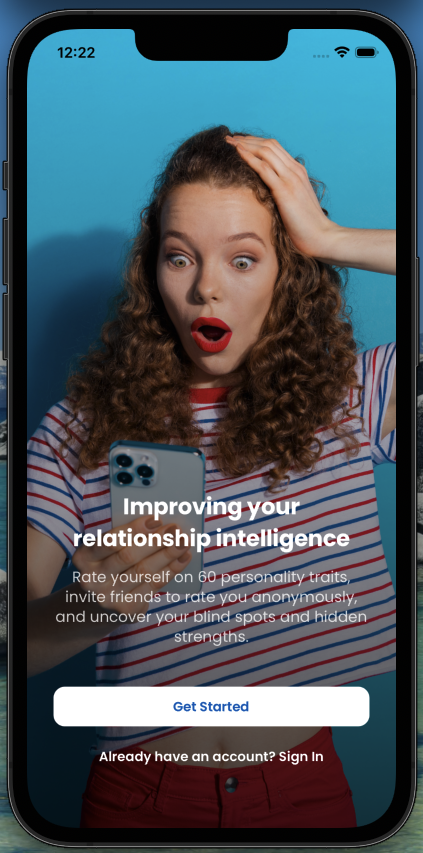
Research analysing millions of interactions across dating apps has revealed a stark reality: digital dating environments routinely skew perceptions of desirability. Studies show that men swipe right between 46–61% of the time, while women typically swipe right only 4–14% of the time. This asymmetry creates a structural imbalance where many women receive large volumes of attention while most men struggle to gain visibility.
The result is a distorted marketplace. AttractIQ helps men and women to gain a more accurate view of themselves by people who know them well.
In some datasets, women match with roughly 45% of profiles they like, while men match with only about 3%. Network modeling studies of dating platforms also show that attention tends to cluster around a small minority of users, leaving the majority with very little engagement.
“These platforms weren’t designed to give people an accurate picture of their dating prospects,” says founder Roy Sheppard. “They were designed to maximise swipes and screen time. That has consequences: inflated expectations for some users and unnecessary discouragement for others.”
TrueSelfIQ aims to change that.
"I see a future where singles who are serious about finding a long-term partner can include their TrueSelfIQ score as part of their dating profile so potential partners can see something far more meaningful, than the millions of superficial profiles seen today.” says Sheppard.
2026 edition
download the e-Book
Please support this author by buying direct. (The global online retailers insist on taking very high commissions - sometimes as much as 70%!)
2026 edition
audioBook
Narrated by the author. Please support Roy by buying direct.
(The global online audiobook retailers insist on taking up to 70% of the retail price!)

Other e-books


e-Book or audiobook
Do you brighten a room when you walk in - or when you leave?
Post-pandemic, how awkward or anxious do you feel when walking into a room of strangers at social or professional settings? It's now extremely common everywhere. This eBook will help you.
It's short, succinct and easy-to-read packed with pocket wisdom, offering more than a hundred practical tips and ideas. You will refer to this little book time and again.
Meet, Greet & Prosper includes:
- How to walk into any room with confidence.
- Conversation is a dance - learn the steps to become an accomplished conversationalist
- Tips to remember people's names.
- How to be memorable for the right reasons.

About the author.
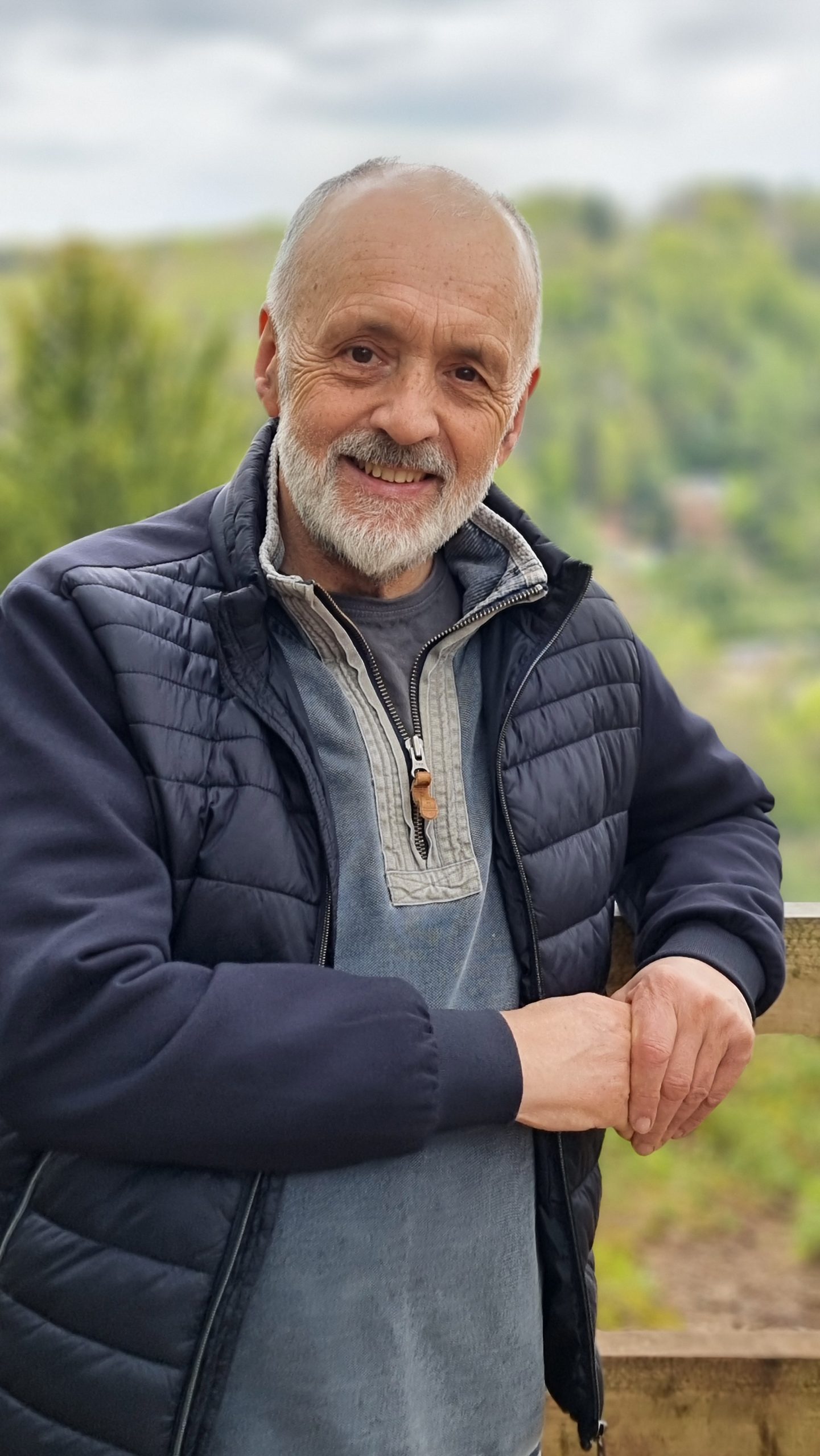
A former BBC TV and radio presenter and an international conference speaker, emcee and facilitator.
He is the author of seven personal development books, featured in countless newspapers and magazines and has been interviewed many times on radio and TV about his work.
Roy is also the founder of the Healthy Masculinity Channel on YouTube which helps teen guys become good young men. https://YouTube.com/@ModernManAcademy